
Conceptualizing Cafe Futures using Artificial Intelligence as a collaborator.
The future of café design won’t be drawn — it’ll be described.This work imagines a world where words shape architecture, and intention becomes structure.AI isn’t a shortcut — it’s an amplifier. It lets us move faster, imagine deeper, and design more fluidly than ever before.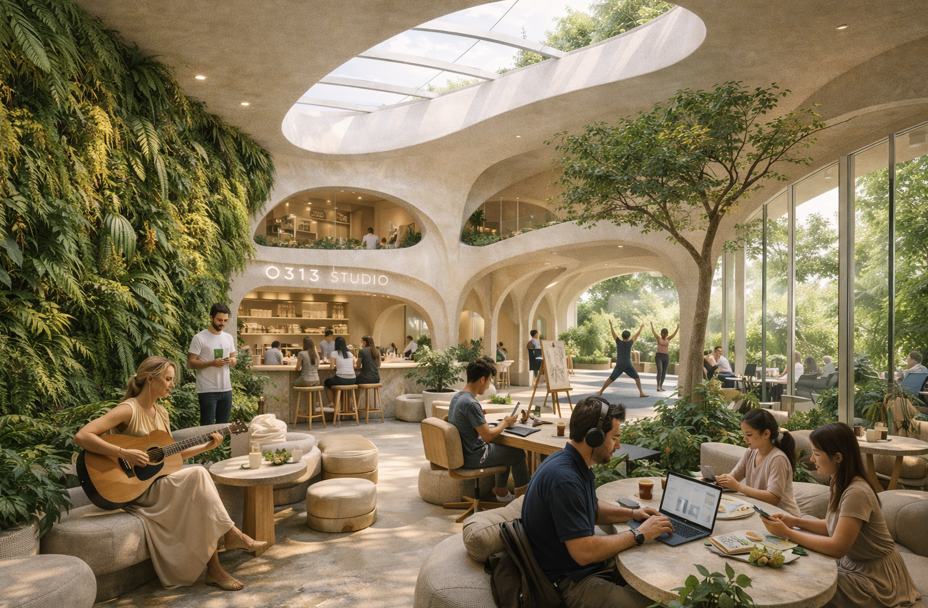
Using Open AI’s ChatGPT image generator 4.O to generate this photo, it captures the essence and moods future spaces can have without spending hours on rendering concepts and futures. Utilizing Ai for its speed aids the modern day designer by producing images quick. AT the same time, the modern day designer should be skillful in prompting AI, thus punctuality and concise language is the secret ingredient to producing the highest quality images that deliver thoughtful and conceptually focused spaces and designs.
Prompt as Design. Language as a material.
This image was generated using a custom-crafted AI prompt — written not just to describe a space, but to shape a feeling, a materiality, and a future.
Below is the exact language I used to guide the generation:“Generate me an image of a physical cafe space in the future. What can the future of cafe spaces look like? I want to see an image of a cafe called O313 Studio. Conceptualize a modern and organic feeling space, like it belongs inside and outside and blends into the surrounding environments seamlessly. Let the space feel modern, with a colour palette of warm whites and creams. The design should be a perfect balance between Scandinavian minimalism fused with strong biophilic and bio design qualities. I want the place to feel more organic rather than linear and geometric. Show people interacting and existing in the space. You can be inspired by plant walls, floor to ceiling walkways, and arches. Make this cafe new and modern feeling, like a breath of fresh air for architectural and environmental design. More modern and biophilic and less minimal.”
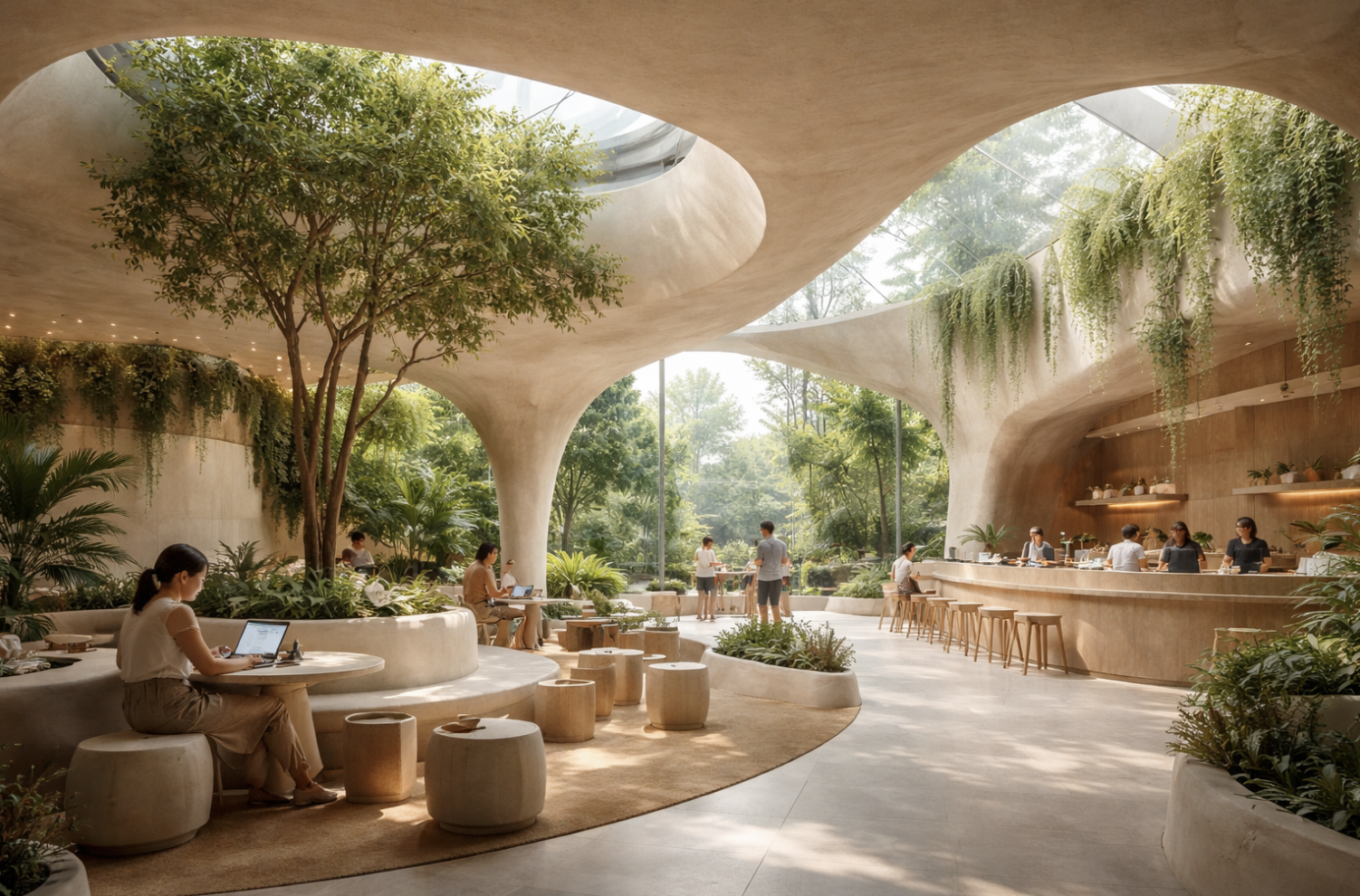
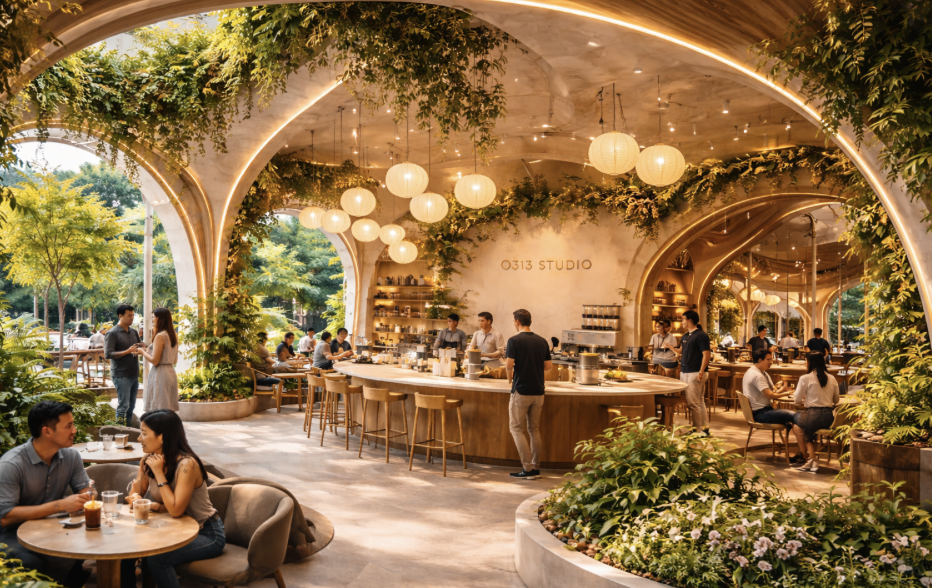
This first prompt established the architectural foundation — organic forms, Scandinavian restraint, biophilic integration, and a seamless relationship between interior and exterior.
It defined the space, but space alone is never the experience.
When we think about spaces, we need to think about the many systems that live within them — emotional, social, environmental, and human. Using ChatGPT as a collaborator in this process makes these systems more accessible for the modern designer to surface and refine. With full control over language, the prompt becomes a living design tool. It allows emerging designers to continue learning while exercising imagination, intuition, and creative authorship through words.Precision alone is not what defines meaningful collaboration with AI. Human ideas, questions, and sensitivities are the core drivers. The results would not exist without the designer shaping the prompt — AI responds, but it does not originate intent. At this stage, the prompt shifted. The focus moved away from architecture and toward experience.enhancing.
To be continued…